
The State of Quick-Serve Restaurants in 2025
Now, perhaps more than ever before, quick-serve restaurants (or QSR in industry terms) continually work to adapt and evolve in order to engage guests. From familiar fast-food restaurants to favorite fast-casual locations like the local Freddy’s, restaurants across the country are navigating how to reimagine once standard practices and integrate new approaches to better support their continued success, their team and their guests. This guide surveys the following key points pertaining to the state of quick-serve restaurants in 2025, specifically in relation to guest experience.
● Definition of a quick-serve restaurant
● Current consumer trends informing quick-serve restaurant operations
● Predictions for continued industry influences
Keep reading to learn more about quick-serve restaurants in 2025, including how Freddy’s restaurants continue to evolve in order to best serve our guests.
What is a quick-serve restaurant?
As explained at Toast, the term quick-service restaurant is more specifically used within the restaurant industry itself (versus by diners) and distinguishes this type of restaurant from others. At a quick-serve restaurant, fast food preparation and service are key, and there is generally a limited menu of items available. In terms of ordering, quick service is often achieved by ordering and receiving food at the counter, a drive-thru, or more recently via mobile app and delivery or pick-up station versus tableside. In comparison to other types of restaurants, creating a particular ambiance for diners to enjoy has historically been less of a focus, especially at fast-food restaurants.
In the restaurant world, as with daily life, terminology and its use change regularly. Similarly, industry terms like QSR may be used in reference to the variety of faster service models, even if there are subtle nuances, as is often the case with fast-food vs. fast-casual experiences. As explained in QSR Magazine, dining establishments were once either considered full service or limited service. As restaurant experiences evolved, the limited-service designation became too broad to accurately capture the actual operations of the restaurants and other establishments that fell into this category. Consequently, sub-categories emerged including quick service, fast casual and more. In their discussion of whether or not even these newest descriptors still remain as distinct as they once were, the experts at QSR Magazine explain that the diners themselves are most likely to experience the subtleties of their various experiences:
“These differences [between quick-service and fast-casual restaurants] include restaurant decor, level of service, quality of the ingredients, and even the branding. Notice how quick-service restaurants, for example, rely primarily on speed, ease, and value for money. Fast casuals, however, are more likely to use the language of quality or health, targeted at busy professionals. And even when it comes to speed, the purchase experience between quick service and fast casual is distinct. Quick-service restaurants strive for lightning speed. Fast casuals, on the other hand, may be quick, but customers can expect to wait 5–10 minutes for their food to be prepared and handed to them.”
To further help illustrate the operations at fast-casual restaurants, like Freddy’s, let’s take a look at how our approach aligns with the above characterization. We prioritize made-to-order options across our menu but still aim to provide food as quickly as possible, similar to the approach of a fast-food restaurant. To help our guests manage their dietary needs and preferences, nutritional and allergen information is available on our website, and calorie amounts are listed next to the menu items. Additionally, we offer customization beyond the size selection for a side or drink (though that is available too). For example, here are just a few of the ways that guests may alter their order of a single steakburger:
Make it a combo meal with a choice of side and drink or frozen custard treat. With so many different sides, drinks and treats on our menu, there are multiple versions of how this final combination may look.
Omit, add or swap ingredients. From swapping a bun for a lettuce wrap or adding extra meat, cheese or vegetables, guests have plenty of choices. With over 20 different toppings to choose from, the potential combinations for this single steakburger are numerous.
Choose whether the sauces are to be provided on the steakburger or on the side. Opt to remove standard condiments or add other sauces of your choice.
In 2025, quick-serve restaurants in particular are experiencing rapid evolution and growth, as discussed at the Restroworks Blog. Consequently, beyond fast-food and fast-casual restaurants, other types of quick-serve restaurants are gaining prominence, such as ghost or cloud kitchens and automated or self-ordering operations. However, many quick-service restaurants today are starting to integrate elements from other models, such as the fast-casual experience, to improve their own operations and customer engagement. Find out more about how consumers are influencing these expanding types (or relatives of – depending on your point of view) quick-serve restaurants in the next section.
Key Areas of Emphasis in 2025 for Quick-Serve Restaurants
Aside from the continued developments in the available types of quick-serve restaurants, the state of these QSRs and other restaurants is impacted by consumer interests. From an increased emphasis on sustainability to even more choice in multiple facets of the dining experience, industry professionals are encountering a few familiar influences and learning to navigate some new or re-emerging interests. Five of the key areas of consumer interest are included below, as well as how these preferences are being addressed at Freddy’s.
1. Customization
In discussing trends in fast-casual restaurants, DoorDash declares that “customer menu preferences are no longer optional.” However, this reality is true not only within QSRs but across the industry as a whole. Addressing guests’ diverse wishes may also take a variety of forms. The option for individuals to customize existing menu offerings, often in multiple ways, is one option. Mintel notes that choices of protein, portion and spice levels particularly appeal to today’s diners. Additionally, the incorporation of globally-inspired flavors as well as menus that honor lifestyle and dietary needs further round out the 2025 restaurant wishlist for many quick-serve restaurant guests.
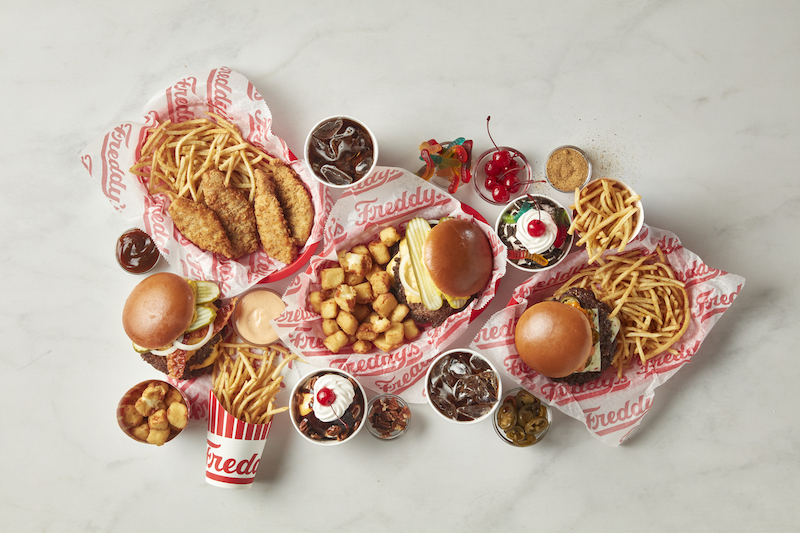
Steakburgers, frozen custard treats and other menu selections are available for customization at Freddy’s. Whether guests wish to create their own frozen custard sundae, concrete or shake with the custard flavor, toppings, and sauce of their choice or prefer a lettuce wrap for their Grilled Chicken Club Sandwich, customization can be done via mobile ordering on the Freddy’s app or in-house. Freddy’s guests can also design combo meals to their specifications. For example, with the Freddy’s Original Patty Melt Combo, guests are able to add or omit toppings, choose a frozen custard treat instead of a soda, or opt for Tots instead of Freddy’s Fries. For many years, our menu has also featured a wide range of proteins, from the black bean-based veggie burgers named as a favorite at HuffPost to specialty preparations like the Prime Rib Steakburger.
2. Technology & AI integration
According to The Food Institute, some of the most important technology updates relate to ordering methods, such as by mobile app, voice AI at the drive-thru and via kiosk. As emphasized in this blog post and others, however, it’s the quick-serve restaurants that are combining these improvements with human connection that most engage diners. While leveraging the benefits of AI is a focal point for many restaurants this year, it is not the only technological consideration to explore. As QSR Magazine highlights, enhancing an existing website may be the first necessary improvement for a restaurant. Whether ensuring that the website design works on mobile devices or that the contact information and restaurant locations are easy to find, these efforts matter to both individuals ordering online as well as those who may visit in person. At one time, it may have been enough for a restaurant to just have a website or an app. Today, the consumer expectation is that their utility needs to be optimized, not only to engage guests but also to avoid discouraging them from a restaurant altogether!

As addressed by our company’s CEO, Chris Dull, in this article at Forbes, digital platform enhancements (as well as new restaurant prototypes focused on efficiency) have been ongoing. For example, the summer of 2022 saw the release of Freddy’s first app. This easy-to-use mobile app is available at Google Play and the App Store. Here’s how this app has been designed to enhance the experience of Freddy’s guests:
● Enables guests to quickly find the nearest Freddy’s and schedule their order for carry-out, delivery or dine-in at a time that works for them.
● Supports customizing orders in line with each guest’s specifications and allows these orders to be saved for later viewing and/or reordering.
● Provides for easy management of Freddy’s Rewards, including tracking accumulated points and viewing available rewards for redemption (or the remaining points needed prior to bigger rewards!).
● Simplifies the payment process, as guests can save their payment information or gift card for easy checkout
● Celebrates special occasions like birthdays or National Steakburger Day with exciting offers
Whether used via the app or desktop, the loyalty program at Freddy’s not only provides value to our guests, but it is also one of the reasons that our restaurant appeared on QSR Magazine’s Top 50 List. Using technology, especially social media outlets, also allows us to better connect with our community of diners. From sharing frozen custard creations to expressing our gratitude for the $381,900 raised for Folds of Honor during National Military Appreciation Month in May, social media platforms like Instagram provide us with the opportunity to share big news and hear from and connect with our guests!
3. Environmental Considerations
Many diners today are looking for quick-serve restaurants and other dining establishments to consider the ambiance created in the restaurant, as well as a restaurant’s impact on the larger environment. Consequently, key areas of emphasis include giving more attention to sustainability and food transparency, as well as the restaurant experience as a whole. Eco-friendly packaging, the use of local products, and opportunities to reduce food waste, in addition to interior design updates, are some of the ways that restaurants are addressing these consumer concerns.
Since the founding of Freddy’s Frozen Custard & Steakburgers® in 2002, hospitality has been at the heart of our brand in addition to quality and cleanliness. At Freddy’s, we want our guests to enjoy fresh, quality food in a fun, clean and family-friendly environment. Our design features, as further detailed at Foodservice Equipment & Supplies Magazine, are selected to help create this atmosphere and for their longevity. From the durable stainless steel containers and stands to the solid-surface tables and red vinyl seating options, these choices help minimize the need for frequent replacement while creating a welcoming look and feel. Currently, we are updating our spaces to further improve efficiency while continuing to offer quality food and a comfortable atmosphere.
As part of the National Restaurant Association’s emphasis on reducing food waste, two recommended methods for food waste reduction include the ability for guests to choose their sides and share their meal preferences. These practices are standard at Freddy’s. Our made-to-order approach means that the food people receive is exactly what they want. By enabling guests to customize the size of their selections, not to mention the menu item itself, this methodology aims to increase guest satisfaction and reduce the amount of food waste that gets thrown away at the end of a meal.
4. Flexibility
Since guests are looking for restaurants that welcome customization and make it easy to do so, it’s unsurprising that they are also looking for similar freedom in terms of their dining timelines. Regarding essential quick-serve restaurant trends this year, Forbes emphasizes the importance of flexible dining experiences. Opportunities such as specialty dining events and all-day menu availability are two examples of how restaurants are adapting to consumer preferences.

While the exact dining hours are specific to each of the hundreds of Freddy’s across the country, typically our fast-casual restaurants are open for approximately 12 hours of service. During the scheduled hours at any given location, the same menu is available throughout the day. Whether a guest is craving a Cold Brew Caramel Crunch to start the morning off right or a late-night meal or snack, diners can find their favorites at Freddy’s throughout the posted hours of operation. Plus, we also offer catering services. Therefore, guests who want to enjoy Freddy’s food during or outside of our regularly scheduled hours can simply place and pick up their regular or catered order when their local Freddy’s is open and then enjoy it whenever they like.
5. Value
The National Restaurant Association® continues to highlight value as key for guest engagement, but notes an expanded definition of what value means. The desire for special offers and combo deals, as well as overall affordability, continues. Relative to the integration of technology, the visibility of these value items is also essential. For example, the study findings from Field Agent and Kantar highlighted at QSR Magazine suggest that accessing value menu information was easiest for guests when they used mobile ordering. Diners today also account for experience and innovation in their assessment of a restaurant’s value. Therefore, many quick-serve restaurants are giving more consideration to their in-house environment as well as their menu offerings.
Aside from our continued attention and ongoing updates to our overall dining experience at Freddy’s, we are continuously adjusting our menus and adapting to guest preferences and requests. Our limited-time offers often celebrate unique flavors of the seasons or feature innovative creations like mashups of comfort classics. Sometimes, these menu selections eventually become part of our standard menu based on guest feedback, like the Grilled Cheese Steakburger. In other circumstances, they may be here and then gone almost as quickly as they arrived, as with the mid-summer farewell to the Key Lime Pie Concrete and welcome to the Dr Pepper® Frost.
Additionally, Freddy’s menu makes it easy to find combo meals and explore their preparation. All items on the menu also list the calorie information. The combo meals feature calories related to the standard preparation of the chosen sandwich for that meal, but not the calories of sides, drinks or treats that may be added. However, this information is available during the customization process. As they order online or via the website, guests can also clearly see the changes that are selected, as well as the impact (if any) on the final meal price.
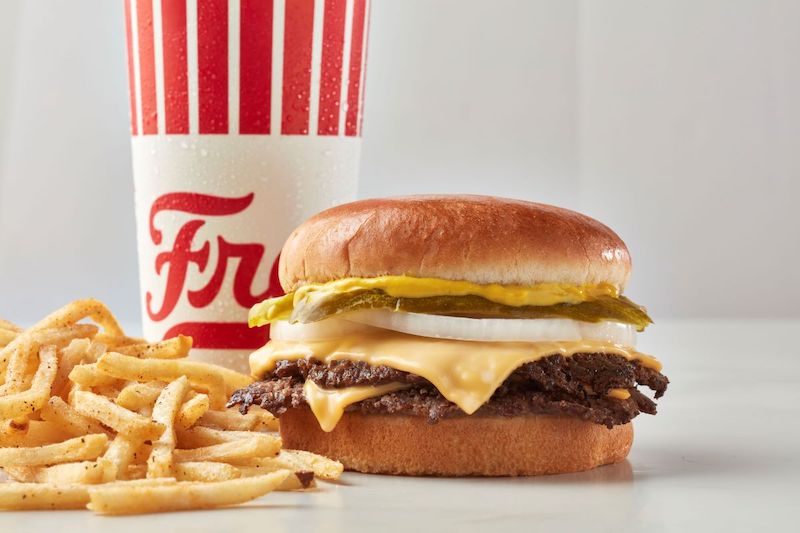
Our combo meals at Freddy’s are a value-focused choice that still prioritizes fresh, quality and customizable food, beverages and treats. As further testament to our commitment to value, as well as innovation and service, see other awards that we’ve won in our industry.
Future QSR Trends

Moving forward, quick-serve restaurants will continue to focus on updating existing technology, as well as integrating AI and other enhancements. While ordering availability and loyalty programs are often available for mobile apps as well as desktops, Incentivio explains that the use of AI can further help optimize the impact of these programs and offer other benefits. For example, in terms of personalization, AI may be used to provide new menu recommendations or guest-focused special offers. Similar functionality may be used to improve marketing and engagement efforts. While there are many potential advantages of these improvements and innovations, such as increasing personalization or operational efficiency, QSR Magazine also urges caution in terms of cybersecurity when integrating these new tools.
Although the desire for food delivery remains ongoing, increased opportunity for connection is another focal point for many restaurants. Although QSRs will need to continue navigating the integration of technology-based conveniences, like contactless payment and online ordering and delivery, many guests are seeking opportunities to connect in person as well. As discussed by Synergy Restaurant Consultants, attention has already started to turn toward prioritizing connections in restaurants, so some establishments have already begun incorporating comfortable and functional design features and renewed the emphasis on hospitality. For example, some quick-serve restaurants are choosing to put little notes on food items or asking more questions when interacting with guests. Others are focusing on increasing the comfort and welcoming nature of their interiors. This investment is intended to realize improvements in guest engagement, brand loyalty and more. Additionally, many restaurants may continue to leverage their social media presence not only for marketing purposes but also for facilitating a community for their customers.
As with a choice of preparation, culinary inspirations and eating times, diners will likely continue looking for restaurants to accommodate their health and wellness preferences in even more ways, as shared at Toast. The availability of plant-based items and the ease of nutritional management are just two of many potential considerations. DoorDash further highlights the desire for menu inclusivity and transparency around ingredients, allergens and more.
Quick-serve restaurants are continuously adapting in order to succeed. Consumer interests and preferences often drive trends and developments in restaurant operations, menu design and more. At Freddy’s, we prioritize fresh, quality, made-to-order food, as well as the preferences and needs of our diners. Whether you’ve been visiting us for more than two decades or a limited-time offer like the BBQ Brisket Steakburger Combo has enticed you to enjoy our menu selections for the first time, we look forward to serving you incredible food and creating a delicious dining experience, whether you place a mobile order for delivery or carry-out on the app or dine in at your local Freddy’s!